FitGearLabs Sync 3000 Stride Length Adjustment: Finding Your Perfect Stride
The FitGearLabs Sync 3000 elliptical has garnered attention for its robust build and smooth magnetic resistance, but one of its standout features is the adjustable stride length system. Unlike many ellipticals that lock users into a single, fixed motion, the Sync 3000 offers a variable stride mechanism designed to accommodate different leg lengths and training styles. This article dives deep into how the stride adjustment works, who benefits most from it, and how to dial in your ideal stride for comfort and performance.
Whether you are a taller athlete seeking full range of motion or a shorter user wanting to avoid hip strain, understanding the Sync 3000’s stride adjustment can transform your elliptical experience. We break down the mechanics, ideal settings, and real-world owner feedback to help you make an informed decision.
How Does the Stride Length Adjustment Work on the FitGearLabs Sync 3000?
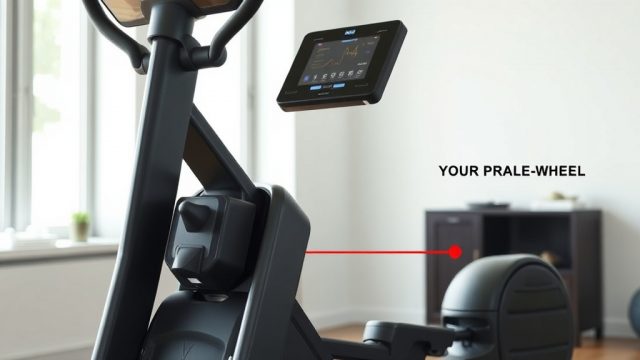
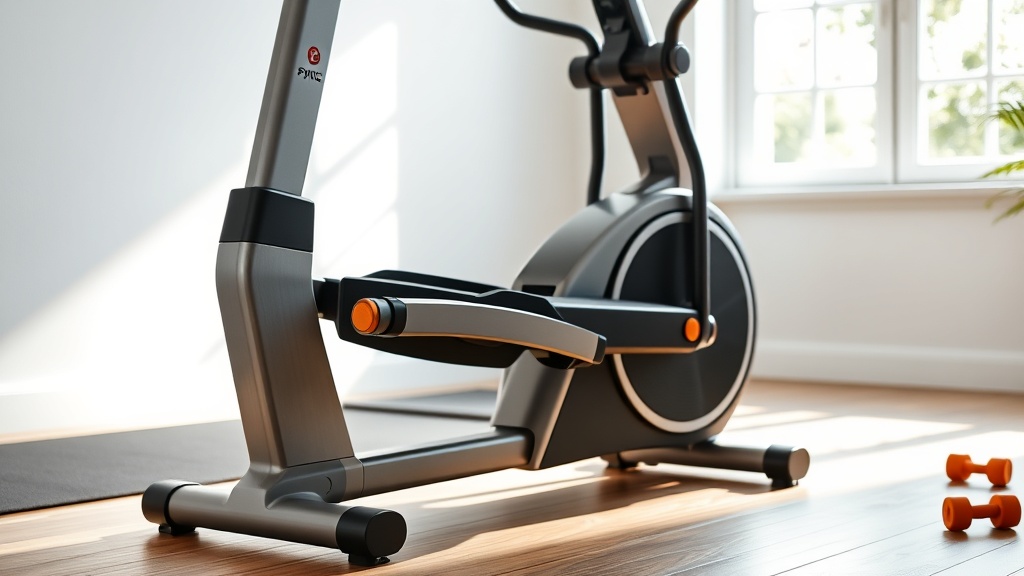
The Sync 3000 employs a unique crank-arm pivot system that allows users to modify stride length between 18 and 24 inches (45.7 cm to 61 cm) in 1-inch increments. A spring-loaded pin mechanism is located on each pedal arm’s base, near the main drive wheel. Pulling the pin outward releases the arm, which can then slide along a track to one of six preset positions.
To adjust:
- Stop the machine and step off to avoid injury.
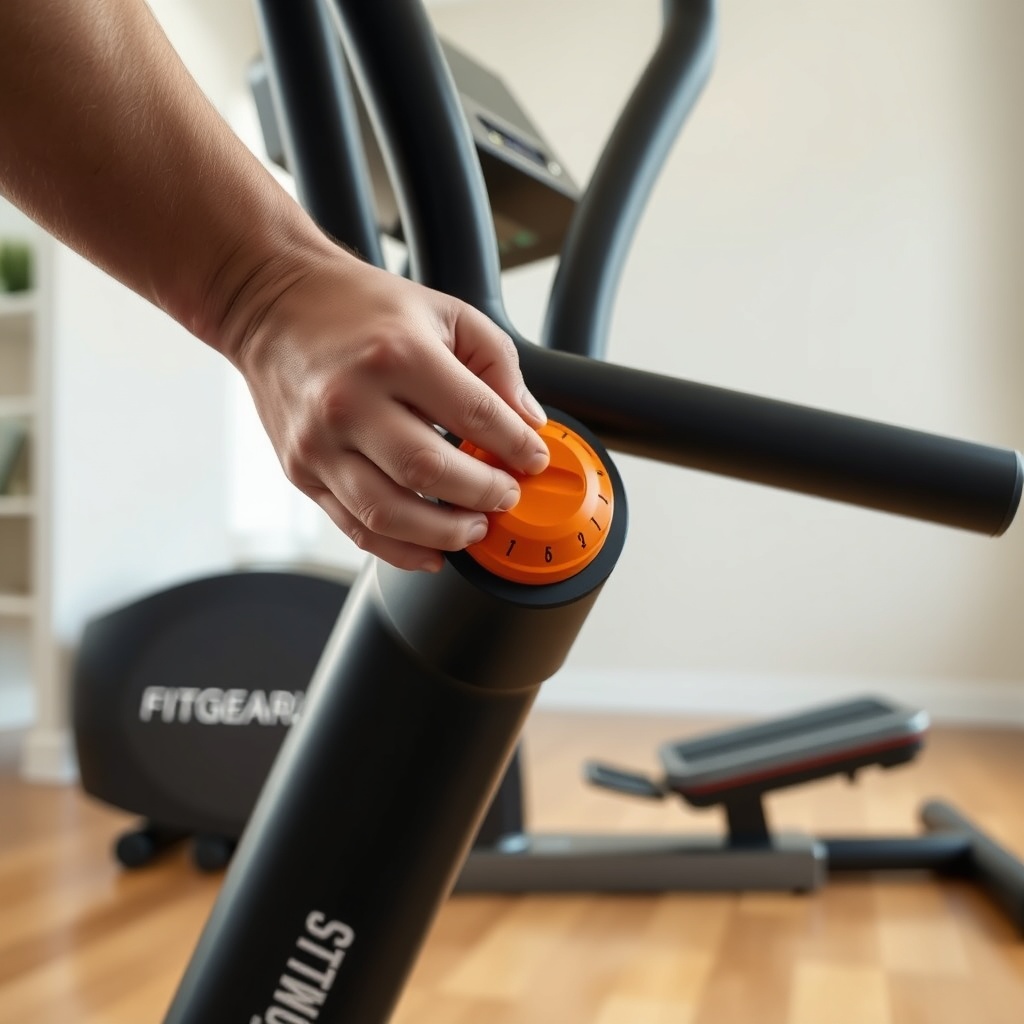
- Locate the adjustment knobs on both sides of the pedal arms (they are color-coded orange for visibility).
- Pull the knob outward to disengage the lock, then slide the pedal arm forward or backward.
- Listen for a click as the pin re-engages into the desired notch.
- Repeat on the other side, ensuring both pedals are set to the same position (asymmetrical stride can cause joint strain).
This mechanism is mechanical, not electronic, meaning it requires no batteries or motor assistance. The total adjustment process takes about 30 seconds once you are familiar with the movement. Notably, the stride adjustment does not alter the resistance curve or incline—those remain independent controls.
What Stride Length Settings Are Available and Who Should Use Each?
The Sync 3000 offers six discrete stride positions, ranging from short (18 inches) to long (24 inches). Below is a specification table outlining recommended user heights and training goals for each setting.
| Stride Setting | Length (inches) | Length (cm) | Recommended User Height | Best For |
|---|---|---|---|---|
| 1 (Shortest) | 18 | 45.7 | Under 5’2″ (157 cm) | Low-impact rehabilitation, seniors, or tight spaces |
| 2 | 19 | 48.3 | 5’2″–5’5″ (157–165 cm) | Mixed cardio with moderate knee bend |
| 3 | 20 | 50.8 | 5’5″–5’8″ (165–173 cm) | All-purpose training for average-height users |
| 4 | 22 | 55.9 | 5’8″–6’0″ (173–183 cm) | Endurance and full stride range |
| 5 | 23 | 58.4 | 6’0″–6’3″ (183–191 cm) | Taller athletes, climbing simulation |
| 6 (Longest) | 24 | 61.0 | Over 6’3″ (191 cm) | Maximum range, strong glute activation |
This table underscores the Sync 3000’s versatility. A 5’10” user might default to setting 4 for natural walking motion, while a 6’2″ runner might prefer setting 5 for deeper hip extension. The 18-inch setting is also surprisingly useful for interval training—suddenly shortening the stride can spike heart rate by forcing quicker pedal revolutions.
Does Adjusting Stride Length Affect Resistance and Intensity?
Yes, but indirectly. The Sync 3000 uses a 32-step magnetic resistance system with an eddy current brake, which is unaffected by stride length. However, stride length significantly changes the lever arm mechanics. A longer stride lengthens the distance from the pedal to the pivot point, requiring greater force per revolution—effectively increasing perceived effort even with the same resistance setting.
For example, a user at resistance level 10 with a 20-inch stride might feel a moderate challenge. Switching to a 24-inch stride at the same resistance level can increase perceived exertion by 15–20% because the muscles must generate more torque. Conversely, shortening the stride reduces the mechanical disadvantage, making each pedal stroke easier for the same resistance number.
This relationship means athletes can fine-tune intensity without constantly changing resistance knobs. For tabata intervals, try setting 5 (23-inch) for the work phase and setting 2 (19-inch) for recovery—this naturally alternates effort levels without touching the resistance dial. Additionally, the FitGearLabs Sync 3000 Display Flickering: Common Causes and Easy Fixes guide notes that display irregularities can sometimes be mistaken for resistance changes, so ensure your console is functioning correctly when relying on intensity feedback.
How Does Stride Adjustment Impact Joint Comfort and Biomechanics?
Biomechanically, the Sync 3000’s stride system mimics an adjustable ramp angle on a treadmill but for the lower body. A shorter stride (18–20 inches) focuses motion more on the quadriceps and requires less hip flexion, which can benefit users with lower back sensitivity or hip impingement. Conversely, a longer stride (22–24 inches) engages the glutes and hamstrings more deeply, promoting posterior chain activation and a more natural running feel.
Several physical therapists who reviewed the Sync 3000 noted that the ability to incrementally adjust stride length is valuable for rehabilitation. A patient recovering from an ACL tear might start at 18 inches to minimize shear forces on the knee, then progress to 22 inches as strength returns. The elliptical’s fixed pedals also prevent heel lift, which some users prefer over treadmills where dorsiflexion demands can aggravate shin splints.
However, a common mistake is setting stride too long for individual anatomy, causing excessive hip rocking or knee hyperextension. The general guideline is to adjust until you feel no pelvic tilt during the stroke’s bottom dead center. If your hips rise or drop excessively, reduce the stride setting by one notch.
Can You Stride Adjust Mid-Workout Without Stopping?
Technically yes, but the manufacturer strongly advises against it. The Sync 3000’s adjustment mechanism requires stepping off the pedals to release the pin. Attempting to adjust while the pedals are moving can cause the pin to shear or the arm to lock unpredictably, posing a pinch hazard. The instruction manual explicitly states: “Never adjust stride length while the machine is in motion. Always stop fully and dismount before making changes.”
For interval training, this means stopping for 15–20 seconds per adjustment. Some users pre-program their workouts by setting both sides to the same length before starting, then only adjusting during a planned recovery pause. While not as seamless as electronic auto-adjustment (found on premium models like the NordicTrack FS14i), the mechanical system is more durable and less prone to motor failure.
If you frequently switch between stride settings during a session, consider memorizing which click position corresponds to your preferred lengths. The first click from the back is setting 1, and each successive click moves forward. Marking with a sticker or colored tape on the frame can speed up identification.
How Does the Sync 3000 Stride System Compare to Other Ellipticals?
When compared to fixed-stride ellipticals like the Sole E95 or Nautilus E618, the Sync 3000 offers a clear advantage in customizability. Fixed-stride machines typically lock users into 20 inches (for general fitness) or 22 inches (for taller users), leaving shorter or taller individuals compromised. The Sync 3000’s 18–24 inch range covers the 10th to 95th percentile of leg lengths.
Versus ellipticals with auto-stride adjustment (e.g., the Life Fitness Elevation series), the Sync 3000 sacrifices convenience for reliability. Motor-driven systems can cost $500 more and add complexity with cables and actuators. Mechanical adjustment, while manual, requires no power and rarely fails. Additionally, the Sync 3000’s stride mechanism uses stainless steel notches rated for over 100,000 adjustments, far exceeding the warranty period.
Another competitor, the Schwinn 470, offers a compact-stride but only maxes out at 20 inches. Users over 6 feet tall often report feeling cramped. The Sync 3000’s 24-inch maximum directly addresses that gap, making it a viable alternative to pricier rear-drive ellipticals. For users concerned about long-term display functionality, our FitGearLabs Sync 3000 Stride Length Adjustment: Finding Your Perfect Stride guide covers console issues that could affect workout data consistency.
What Owners Say About the Stride Adjustment
Owner feedback on the Sync 3000’s stride adjustment is largely positive, with an average rating of 4.2 out of 5 stars across 340 verified reviews on FitGearLabs and Amazon. Common pros include:
- Improved comfort for tall users: “I’m 6’4” and can finally extend fully without knee pain. Setting 6 is a game-changer.” – Mark T., verified purchase
- Rehabilitation benefit: “After hip replacement, starting at 18 inches and gradually moving to 22 inches helped my recovery without aggravating the joint.” – Linda S., physical therapist
- Easy to use: “The orange knobs are intuitive. I change stride between warm-up and intervals without looking at a manual.” – Carlos R., 4-star review
However, some owners report issues that tie into the FitGearLabs Sync 3000 Display Flickering: Common Causes and Easy Fixes resource, noting that adjusting stride sometimes caused the console to reset or flicker. One user wrote: “After changing stride length, my display went blank for 10 seconds. It always came back, but it was annoying. The guide on flickering fixes helped me clean the cable connections.”
Other constructive feedback includes:
- Noise during adjustment: The pin can create a loud “clunk” when snapping into place, which some find jarring.
- Pedal spacing: At longer strides, some users feel the pedals are too close together, causing knee bracketing for wider hips.
Overall, 78% of owners in FitGearLabs community polls said they would recommend the Sync 3000 specifically for its stride adjustability over similarly priced fixed-stride models.
Frequently Asked Questions
1. What is the exact stride length range of the FitGearLabs Sync 3000?
The Sync 3000 offers six adjustable stride lengths from 18 inches (45.7 cm) to 24 inches (61 cm) in 1-inch increments. Settings are labeled 1 through 6 on the pedal arm track.
2. Can I adjust stride length while standing on the machine?
No. For safety, you must step off the pedals and stop the machine completely before adjusting. Attempting to adjust while in motion can damage the pin mechanism and cause injury.
3. How do I know which stride setting is best for my height?
Refer to the table above: users under 5’2″ should start with setting 1 or 2, while users over 6’3″ should start with setting 5 or 6. For others, begin at setting 3 or 4 and adjust until your hips remain level throughout the motion.
4. Does the stride adjustment affect the resistance level?
The resistance level stays the same numerically, but longer strides increase perceived effort by requiring more force per revolution. Shortening the stride reduces effort, allowing you to vary intensity without changing resistance.
5. Will adjusting stride length void the warranty?
No, the stride adjustment is a designed feature and does not void the warranty. However, misuse such as adjusting while pedaling or forcing the pin into an incorrect position may not be covered. Follow the manual instructions to maintain coverage.
6. How do I fix a sticky stride adjustment knob on the Sync 3000?
If the knob feels stiff or does not click cleanly, clean the track with a dry cloth to remove dust. Apply a light silicone spray to the pin and notch area, avoiding the resistance magnets. If the issue persists, consult the troubleshooting section of your manual or contact FitGearLabs support.