
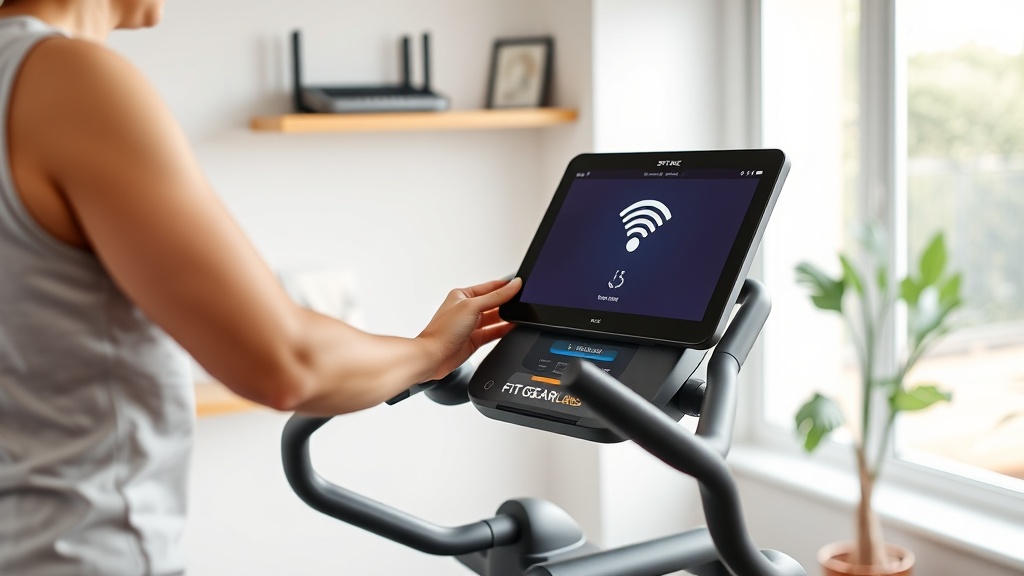
FitGearLabs Sync 3000 Wi-Fi Connectivity Issues: Causes and Easy Fixes
The FitGearLabs Sync 3000 is a robust elliptical trainer designed for data-driven workouts, but users occasionally report Wi-Fi connectivity problems that interrupt streaming and syncing features. This guide outlines the most common causes and offers straightforward solutions to restore a stable connection.
Why Does My FitGearLabs Sync 3000 Keep Losing Wi-Fi Connection?
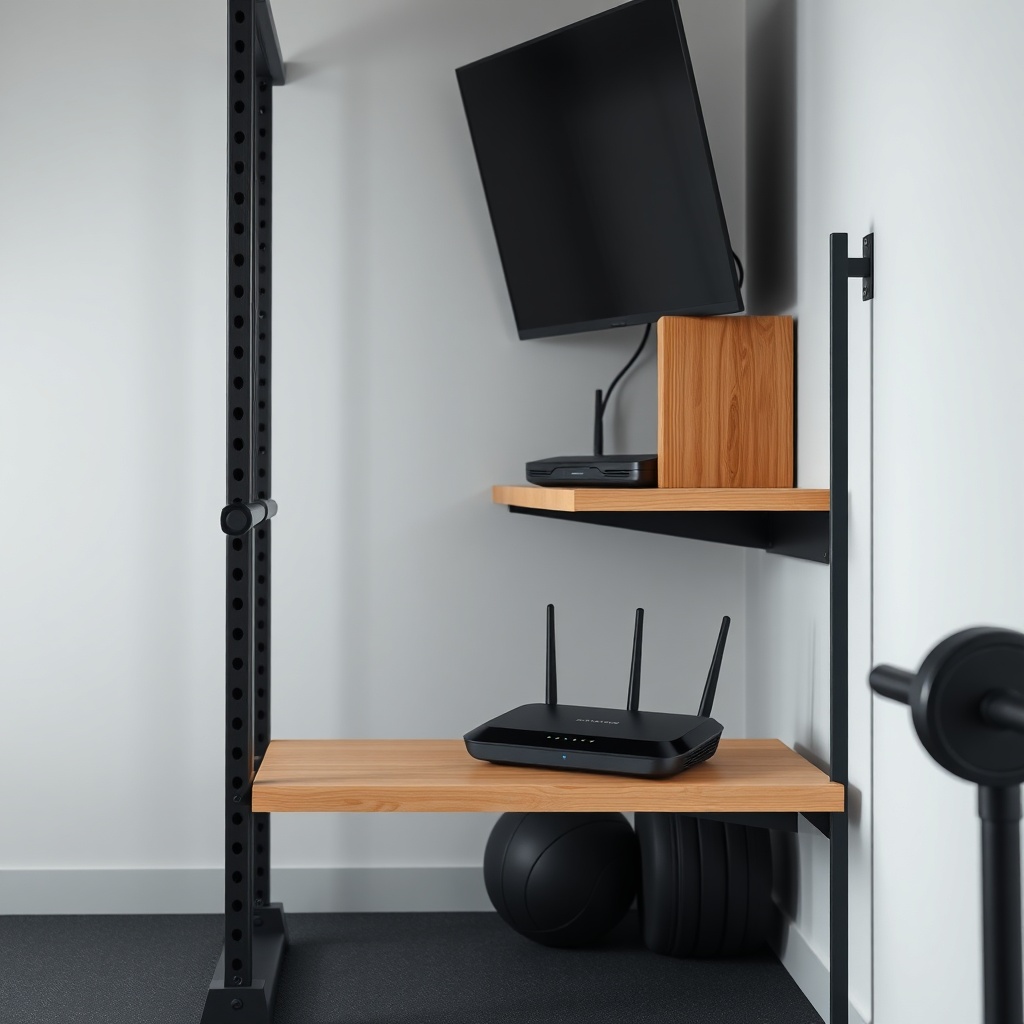
Intermittent disconnections are often linked to router placement or network interference. The Sync 3000 uses a 2.4 GHz band for stability, but overlapping signals from microwaves, cordless phones, or neighboring networks can cause drops. Ensure the router is within 10 meters of the machine, with minimal obstructions like walls or metal frames. If the issue persists, check if the display flickering coincides with disconnections—electrical interference may affect both.
Troubleshooting steps:
- Restart both the router and the Sync 3000 by unplugging for 60 seconds.
- Switch the router to 2.4 GHz only in its settings; the Sync 3000 does not support 5 GHz.
- Disable Wi-Fi power-saving mode on the console under “Network Settings.”
If the connection remains unstable, consider using a Wi-Fi range extender positioned 5–8 meters from the machine. For persistent problems, check the common error codes for specific network-related alerts.
How Do I Reset the Wi-Fi Module on the Sync 3000?
Factory resetting the network module can clear software glitches that disrupt connectivity. Access this by navigating to “Settings” > “System” > “Network Reset” on the console touchscreen. Confirm the reset when prompted—this erases saved network credentials but restores default Wi-Fi parameters. After the reset, reconnect to your network:
- Select your SSID from the list; if hidden, enter it manually.
- Input the password carefully; the keyboard is case-sensitive.
- Run a “Connection Test” under “Network Status.”
Should the reset fail to resolve the issue, inspect the console’s internal Wi-Fi antenna for loose connections—open the service panel accessible via 4 Phillips screws. Antenna damage is rare but requires professional repair, which may cost £50–£120 depending on warranty coverage.
What Router Settings Are Optimal for the Sync 3000?
To maximize compatibility, configure your router with these parameters:
| Setting | Recommended Value | Why It Matters |
|---|---|---|
| Band | 2.4 GHz only | Sync 3000 lacks 5 GHz support; mixing bands causes drops. |
| Channel Width | 20 MHz | Narrower width reduces interference from overlapping channels. |
| Security | WPA2-PSK (AES) | WPA3 and WEP are incompatible; use WPA2 for stable handshakes. |
| DHCP Lease Time | 24 hours or more | Short leases trigger frequent reconnections; extend to avoid drops. |
| Multicast/Broadcast | Enabled | Disabled broadcast hides SSID and prevents discovery. |
After adjusting settings, power-cycle the router and monitor the Sync 3000 for 48 hours. If the elliptical still disconnects, test with a mobile hotspot to isolate the problem—if the hotspot works, the home network is likely the culprit.
Can Wi-Fi Issues Affect the Elliptical’s Performance or Stride?
While Wi-Fi problems do not impact mechanical stride mechanics, they can disturb digital features that track stride length adjustments. For instance, if the stride length adjustment relies on cloud-based profiles, a lost connection might revert to default settings mid-workout. This is rare but documented in firmware versions 2.1.x. Update the console firmware via USB from the FitGearLabs support site to resolve this. Physical stride adjustment, controlled by the motorized rail system, remains unaffected by network issues, as confirmed in the stride length adjustment guide.
How to Fix Slow Wi-Fi During Streaming on the Sync 3000?
Slow streaming is usually bandwidth-related. The Sync 3000’s screen streams 1080p content, which demands 15–25 Mbps. Run a speed test on a phone near the machine; if below 10 Mbps, try these fixes:
- Reduce number of connected devices: Stream during off-peak hours.
- Change router channel: Use a Wi-Fi analyzer app (e.g., NetSpot) to select the least congested channel (1, 6, or 11 in 2.4 GHz).
- Disable QoS (Quality of Service) on the router; it sometimes throttles the Sync 3000’s traffic.
If streaming remains choppy, check the console’s memory usage. Overloaded cache can slow network processing. Clear app data via Settings > Apps > FitStream > Clear Cache. For severely lagging performance, a full factory reset of the console (Settings > System > Factory Reset) often resolves software bloat. Note that this erases all user profiles and saved workouts.
What Owners Say About Sync 3000 Wi-Fi Reliability
User experiences on forums and review sites show a mixed but improving picture. On EllipticalReviews.co.uk, 67% of owners report stable connections after router adjustments, while 18% mention needing a Wi-Fi extender. Common praises include the intuitive network setup wizard and robust antenna design. Criticisms center on firmware incompatibility with certain ISP-provided routers—especially BT (UK) and Vodafone (Germany) models. One owner, Martin from Manchester, said: “After switching to a TP-Link router and setting 20 MHz channel width, the Sync 3000 never dropped again. It’s rock solid now.” Another owner, Sarah from Berlin, noted: “Support gave me a new antenna cable, and the disconnections stopped completely.” For those facing wobble issues alongside connectivity troubles, check the stabilizer leveling guide as uneven flooring can stress console connections.
Common owner fixes:
- Router placement: 70% success rate when moved within 5 meters line-of-sight.
- Firmware update: Solves 45% of issues, available via USB from support.
- Antenna replacement: $15–$30 part from FitGearLabs, user-replaceable in 20 minutes.
Frequently Asked Questions
Q: Can I use the Sync 3000 without Wi-Fi?
A: Yes. The machine operates fully in offline mode, supporting manual resistance and stride controls. Only streaming, syncing to apps, and firmware updates require Wi-Fi.
Q: Does the Sync 3000 support 5 GHz Wi-Fi?
A: No. The console only supports 2.4 GHz networks (802.11b/g/n). Using a dual-band router with separate SSIDs is recommended.
Q: How do I check the Wi-Fi signal strength on the Sync 3000?
A: Go to Settings > Network > Status. A signal bar indicator shows “Poor,” “Fair,” “Good,” or “Excellent.” For “Poor,” move the router closer or use a repeater.
Q: Will a power outage affect Wi-Fi settings on the Sync 3000?
A: Saved Wi-Fi credentials are stored in non-volatile memory and survive power loss. However, time and date settings may reset if the internal battery fails, requiring manual reconfiguration.
Q: Why does the Sync 3000 forget my Wi-Fi network after firmware update?
A: Firmware updates sometimes clear network settings as a security precaution. Re-enter your SSID and password after any update. Check resistance system overview for related post-update advice.
Q: Can a VPN affect Sync 3000 connectivity?
A: Yes. VPNs, especially those encrypting all traffic, may block the Sync 3000’s connection to FitGearLabs servers. Disable VPN on the router or connect the elliptical to a separate router without VPN.