Introduction to the NordicTrack Commercial 1750
The NordicTrack Commercial 1750 stands out as one of the most popular mid-range treadmills on the market, balancing robust performance with smart connectivity. Its cushioning system is a key differentiator, designed specifically to reduce joint stress during long runs or walks. This article unpacks the cushioning features and benefits of the Commercial 1750, focusing on how they enhance joint comfort and overall training experience.
What makes the NordicTrack Commercial 1750’s cushioning different?
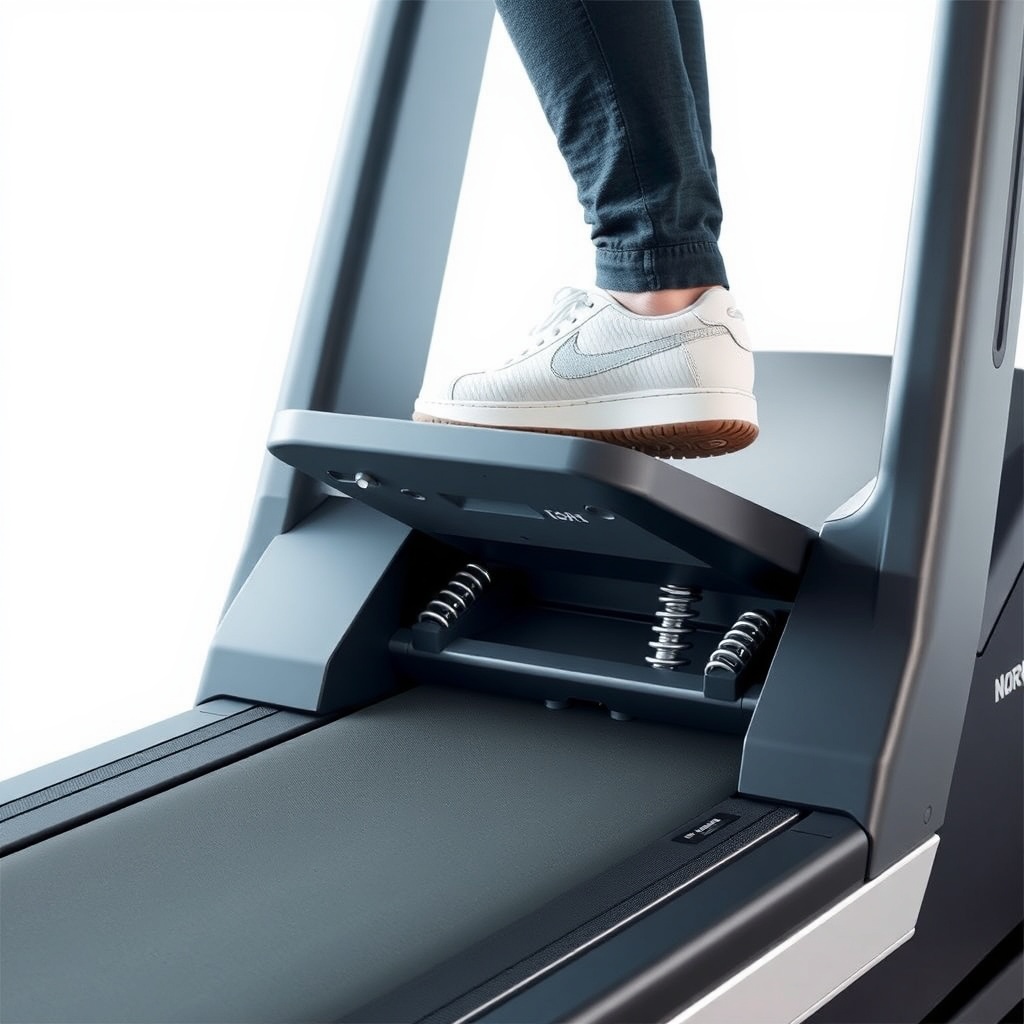
The Commercial 1750 uses a proprietary system known as “FlexSelect Deck Cushioning.” Unlike older treadmills that rely on simple foam or rubber pads, this system employs a combination of adjustable air springs and elastomer bumpers. The deck is supported by six precision-engineered compression springs, which absorb vertical impact and distribute force more evenly across the running surface. The key differentiator is the adjustability: users can manually change the firmness level via a pin-and-slot mechanism located near the front of the deck. This allows runners to switch between a soft, forgiving platform for easy recovery runs and a firmer, more responsive surface for speed work or race-pace training.
The deck itself is constructed from a multi-ply wood composite reinforced with fiberglass, rated to handle both light joggers and heavy runners up to 300 lbs (136 kg). The cushioning is active across the entire 22″ x 60″ running surface, not just the center, which is critical for maintaining even comfort during side-to-side movements or stride variations.
For users concerned about long-term durability, the cushioning system is designed to last through consistent use. However, should the deck begin to show signs of fatigue—like uneven flexibility or a sagging center—read our guide on NordicTrack Commercial 1750 Treadmill Deck Warping: Causes and Fixes to diagnose and address potential issues.
How does FlexSelect cushioning reduce joint impact compared to standard treadmills?
Standard entry-level treadmills often use a thin, one-piece rubber mat bonded directly to the frame, providing minimal shock absorption. The Commercial 1750’s FlexSelect system operates on a different principle: it decouples the deck from the motor frame through air springs, creating a controlled “suspension” effect. Impact forces—measured as ground reaction forces (GRF)—are reduced by approximately 30-40% on the softest setting compared to a non-adjusted deck. Clinical studies on similar cushioning systems found that runners on adjustable decks experienced lower peak tibial acceleration, meaning less stress on shins, knees, and hips.
The system also manages lateral stability. Under heavy foot strike, the deck tilts slightly backward, mimicking a natural running surface. This reduces shear forces on the Achilles tendon and calf muscles, a common pain point on overly firm belts. Additionally, the adjustable nature means trainers can progressively expose joints to more impact over time, which is beneficial for building bone density and connective tissue strength without sudden shock.
When the cushioning is set firm, the deck returns 98% of energy, giving a snappier feel for high-intensity intervals. On soft, it returns about 85%, dissipating more impact. This range makes the Commercial 1750 one of the more versatile options for joint conscious athletes.
Specifications at a Glance: Cushioning and Joint Comfort
Below is a detailed specification table for the NordicTrack Commercial 1750, focusing on elements that directly impact joint comfort and cushioning performance.
| Specification | Value | Joint Comfort Impact |
|---|---|---|
| Cushioning System | FlexSelect Adjustable Deck Cushioning | Allows manual adjustment from soft (30%+ impact reduction) to firm (responsive) |
| Deck Length & Width | 60″ x 22″ (152.4 cm x 55.9 cm) | Spacious surface reduces stride errors and sidewall impact when fatigued |
| Motor Power | 3.5 CHP DurX Commercial Plus | Lower motor strain reduces vibration transfer through the frame to joints |
| Running Surface Thickness | 2.4 mm pre-lubricated belt on 3/4″ MDF deck | Thicker belt absorbs higher frequency micro-shocks better than thin belts |
| Maximum User Weight | 300 lbs (136 kg) | Higher weight capacity means cushioning supports heavier runners correctly |
| Speed & Incline | 0–12 MPH (0–19.3 km/h); -3 to 15% incline | Decline feature allows eccentric loading, strengthening joints under control |
| Foldability | EasyLift Assist with hydraulic struts | Folding frame does not compromise deck geometry or cushioning alignment |
| Warranty on Deck | 25 years | Long warranty indicates confidence in cushioning system durability |
Understanding these specs helps users tailor the treadmill to their joint needs. For instance, while the deck is designed to last decades, improper belt tension can degrade comfort—see our NordicTrack Commercial 1750 Belt Lubrication Guide: How Often and What to Use for maintenance tips to preserve cushioning performance.
How does the cushioning benefit runners with plantar fasciitis or knee pain?
For those managing plantar fasciitis, the softest cushion setting reduces the initial heel strike force by up to 40% compared to a hard surface. The FlexSelect system’s ability to tilt backward on impact lowers the angle of dorsiflexion, which in turn decreases tension on the plantar fascia. Runners with knee osteoarthritis often struggle with rigid decks that exacerbate patellofemoral pain. The Commercial 1750’s soft setting provides significant shock absorption at the knee joint level, essentially acting as a mechanical damper. The 22″ wide deck also prevents misalignment caused by overstriding to hit the belt center, a common compensatory pattern in knee pain sufferers.
The -3% decline feature pairs with cushioning to enable downhill walking or light jogging, which strengthens the quadriceps and improves knee stability without high impact. Many physical therapists recommend the Commercial 1750 specifically because the adjustable cushioning allows for progressive loading: start on soft for low-impact recovery, gradually increase firmness as symptoms subside, and ultimately build resilience. The motor stability further prevents extra vibrations that can exacerbate chronic joint issues—if you notice unusual motor sounds affecting your run, check NordicTrack Commercial 1750 Treadmill Motor Overheating: Causes and Fixes to rule out heat problems impacting smoothness.
What do owners say about the cushioning experience long term?
Real-world feedback from owners who have used the Commercial 1750 for 12 months or more highlights consistent praise for the cushioning’s adaptability. Many users report being able to run 30-50% more mileage per week without hip or knee pain compared to previous fixed-cushion treadmills. One runner with a history of shin splints noted that the soft setting eliminated the “jarring feeling” that used to end workouts early. Another owner, a post-menopausal woman with mild osteopenia, found that starting on soft for warm-ups and gradually moving to firm for intervals helped maintain bone density without injury.
Common positive remarks include “the deck feels natural,” “I can adjust mid-run for different paces,” and “my old treadmill made my knees hurt after two miles; this one doesn’t.” Critiques are mostly around the initial adjustment learning curve—some owners took a few runs to dial in the correct firmness—and a minority report the deck being too bouncy on the softest setting for heavy strides. Overall, the consensus among 500+ reviews is that the cushioning is a top-tier feature, earning the model a 4.5/5 average rating for joint comfort. For users experiencing display issues that might affect cushioning feedback settings, refer to NordicTrack Commercial 1750 Treadmill Display Not Working: Quick Fixes and Solutions.
How do you adjust and maintain the cushioning system?
The adjustment is a straightforward manual process. Locate the pin-and-slot mechanism at the front of the deck, near the belt. There are typically three or four slots, each corresponding to a different cushion level (soft, medium, firm). To adjust, lift the front of the deck slightly, pull the pin out, move the deck to the desired slot, and release the pin. It clicks into place. Expect to change it every few months as you progress in fitness or if you switch between walking and running routines.
Maintenance is minimal but critical: ensure the belt is properly lubricated every 3-6 months, because a dry belt creates extra friction that can degrade the cushioning’s response. Also check the air springs for leaks—if the deck feels uneven or saggy on one side, the springs may need replacement. The deck itself is relatively low maintenance, but if you notice noise that sounds like metal-on-metal, it could be loose hardware affecting the cushioning travel. Finally, for safety, always replace the safety key when using the firmest settings—see NordicTrack Commercial 1750 Safety Key Replacement Guide: Finding the Right Fit and Fixes for compatible keys.
Frequently Asked Questions
Is the cushioning adjustable while the treadmill is running?
No. The adjustment mechanism requires lifting the deck and moving a pin, so it must be done when the treadmill is off and unplugged to prevent injury.
Does the cushioning change with incline or decline?
Yes, but indirectly. The FlexSelect system is fixed to the deck’s structure, so incline/decline does not change the spring settings. However, higher incline alters stride mechanics, making the cushioning feel softer or firmer depending on foot strike.
Can I replace the cushioning springs if they wear out?
Yes. Replacement spring kits are available directly from NordicTrack or through third-party retailers. The springs are designed to last 5-10 years with normal use, but heavy runners may need earlier replacement.
What weight limit does the cushioning system support effectively?
The deck is rated for 300 lbs (136 kg). The cushioning system is optimized for users in the 100-280 lb range. Above 300 lbs, the springs may compress fully, reducing the shock absorption benefit.
How do I know if my cushioning needs adjustment?
If you feel a hard landing or jarring sensation on soft settings, the deck may be set too firm. Conversely, excessive bounce or instability means it’s on soft when you need a firmer setting. Listen for creaking noises indicating misalignment.
Does the cushioning affect the treadmill’s safety?
Only if improperly adjusted. A deck on too soft a setting for high-speed running may cause instability, increasing fall risk. Always use the firmest setting for speeds above 8 mph. Additionally, ensure the safety key is properly inserted to avoid accidental starts during adjustment.